NepState
 Continue with Google
or use email
By continuing, you agree to NepState's Terms and Privacy Policy
Continue with Google

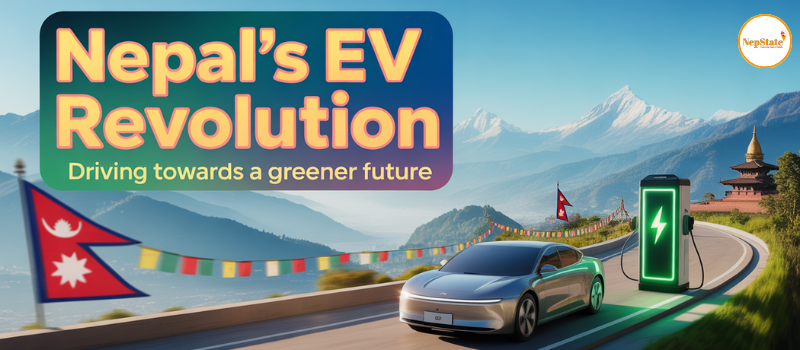
In 2025, Nepal is witnessing a major shift towards electric vehicles (EVs). From electric bikes to cars, the country is embracing sustainable transportation, driven by environmental concerns, government policies, and the growing demand for affordable, green mobility.
Rising Fuel Prices: With petrol and diesel becoming expensive, EVs provide a cost-effective alternative.
Environmental Awareness: Young Nepalis are becoming conscious about pollution and climate change, turning to EVs to reduce carbon footprints.
Government Incentives: Policies include tax reductions, subsidies, and relaxed import regulations to encourage EV adoption.
These factors are creating a fertile market for electric vehicles, making them an attractive choice for urban commuters and eco-conscious citizens.
Electric bikes are currently the most popular EVs in Nepal:
Affordable and easy to charge at home or public charging stations.
Low maintenance and no fuel costs.
Ideal for city commuting in Kathmandu, Pokhara, and other urban areas.
Several Nepali and international brands are now offering stylish and durable electric bikes, boosting the EV market.
While EV cars are still emerging in Nepal, interest is growing steadily:
Imported EVs from Tesla, BYD, and other global brands are slowly entering the market.
Local startups are exploring assembly and service solutions for EV cars.
Charging infrastructure is expanding in urban hubs and highways, making EVs more practical for long-distance travel.
As technology advances and costs decrease, electric cars are expected to become more common on Nepalese roads in the coming years.
The EV revolution is not just for buyers—it’s an opportunity for businesses:
EV charging stations across cities and highways.
Battery manufacturing and recycling solutions.
EV accessories, maintenance services, and local assembly initiatives.
Investing in Nepal’s EV ecosystem today can position businesses for growth as the country transitions to greener transportation.
Despite the momentum, challenges remain:
Limited Charging Infrastructure: More public charging stations are needed for mass adoption.
High Initial Cost: Electric cars still have a higher upfront cost than conventional vehicles.
Technical Knowledge: EV maintenance requires trained technicians, which is currently limited in Nepal.
With proper planning and investment, these challenges can be overcome, making EVs mainstream in Nepal in the next few years.
Nepal’s electric vehicle revolution is more than a trend—it’s a necessary step toward sustainable urban mobility. For young Nepalis, entrepreneurs, and environmental advocates, EVs present an opportunity to save costs, reduce pollution, and invest in the future.
This article is for educational and informational purposes only. It does not constitute financial, investment, or technical advice. Readers should conduct their own research and consult professionals before making purchasing or investment decisions related to electric vehicles.
NepState and the author cannot be held responsible for any outcomes or losses resulting from actions taken based on this article.


Leave a Comment